Black Friday week
📄 Digital book in PDF · read it on your phone or print it
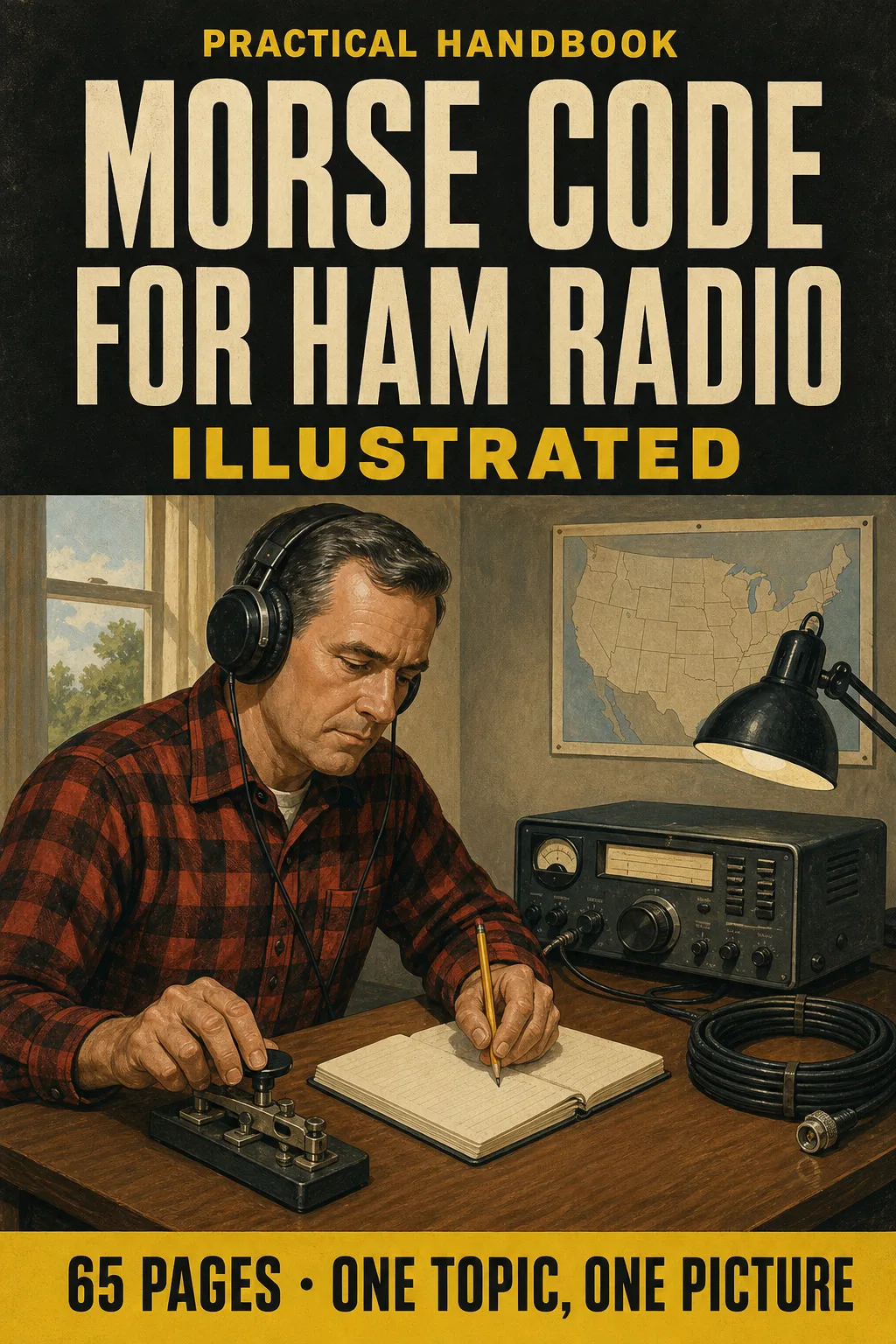
Dit and dah, spacing in units, character vs effective speed, head copy, the straight key and paddles, prosigns, US CW segments and your first QSO. Every topic gets its own page: the drawing first, then what you need to remember. 65 illustrated pages.
🔒 Secure checkout · PDF by email · 30-day guarantee
Every page has one big drawing and a box with the units, codes and steps you need to know:


Swipe to see more →
These are real pages from the book. The table of contents is the full one: 9 parts and 61 topics.
It's evening. You're tuned to a slow CW station on 40 meters and the first two letters come through fine. Then one letter slips by, you stop to figure it out, and the next five go with it.
That's not on you. Most guides cover copying in long paragraphs about focus and practice, but they never show what to do in the half-second after you miss a letter.

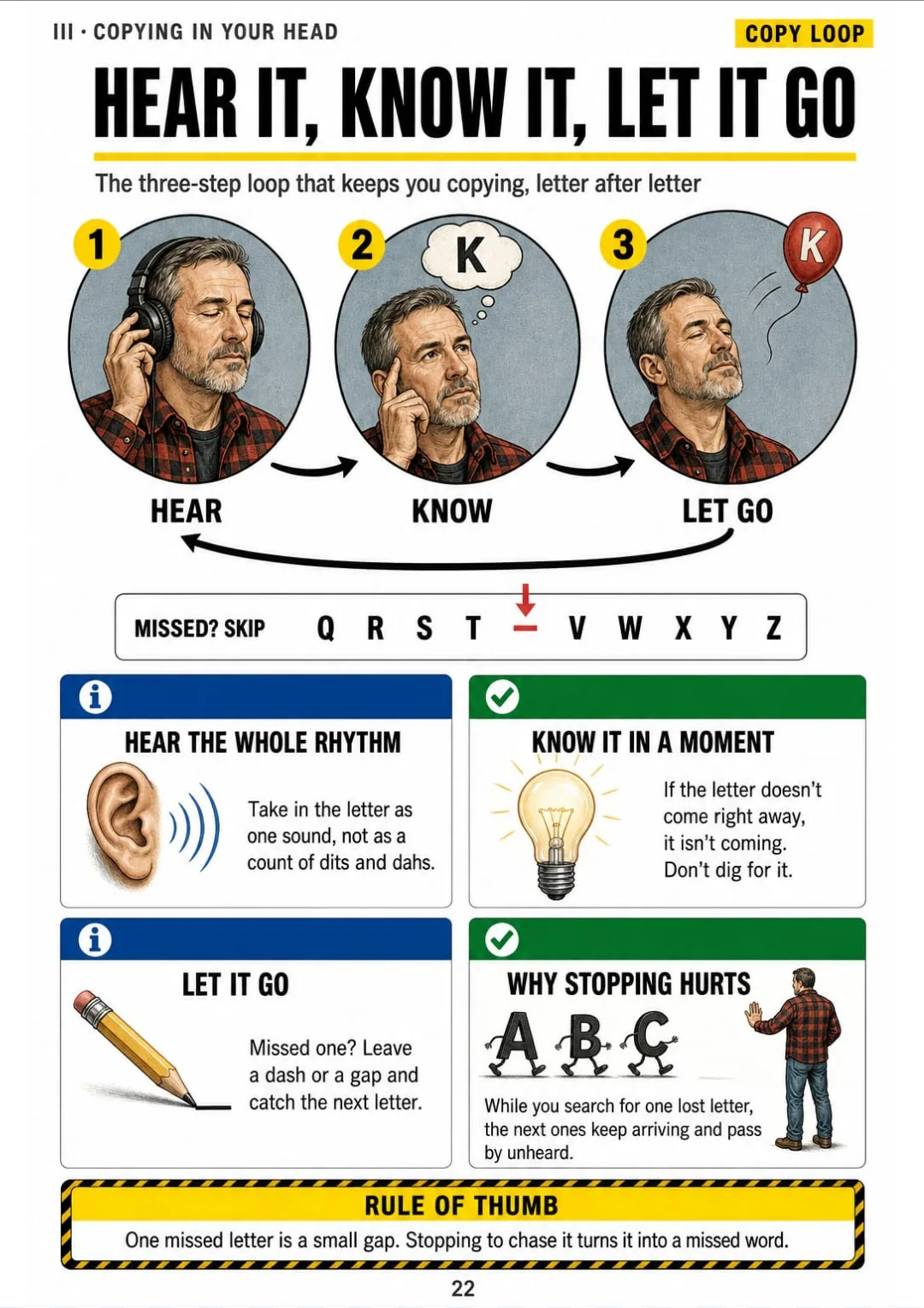
In this book that moment gets one page: the copy loop drawn as three steps, hear it, know it, let it go. A missed letter gets a blank, and your ear moves on to the next one.
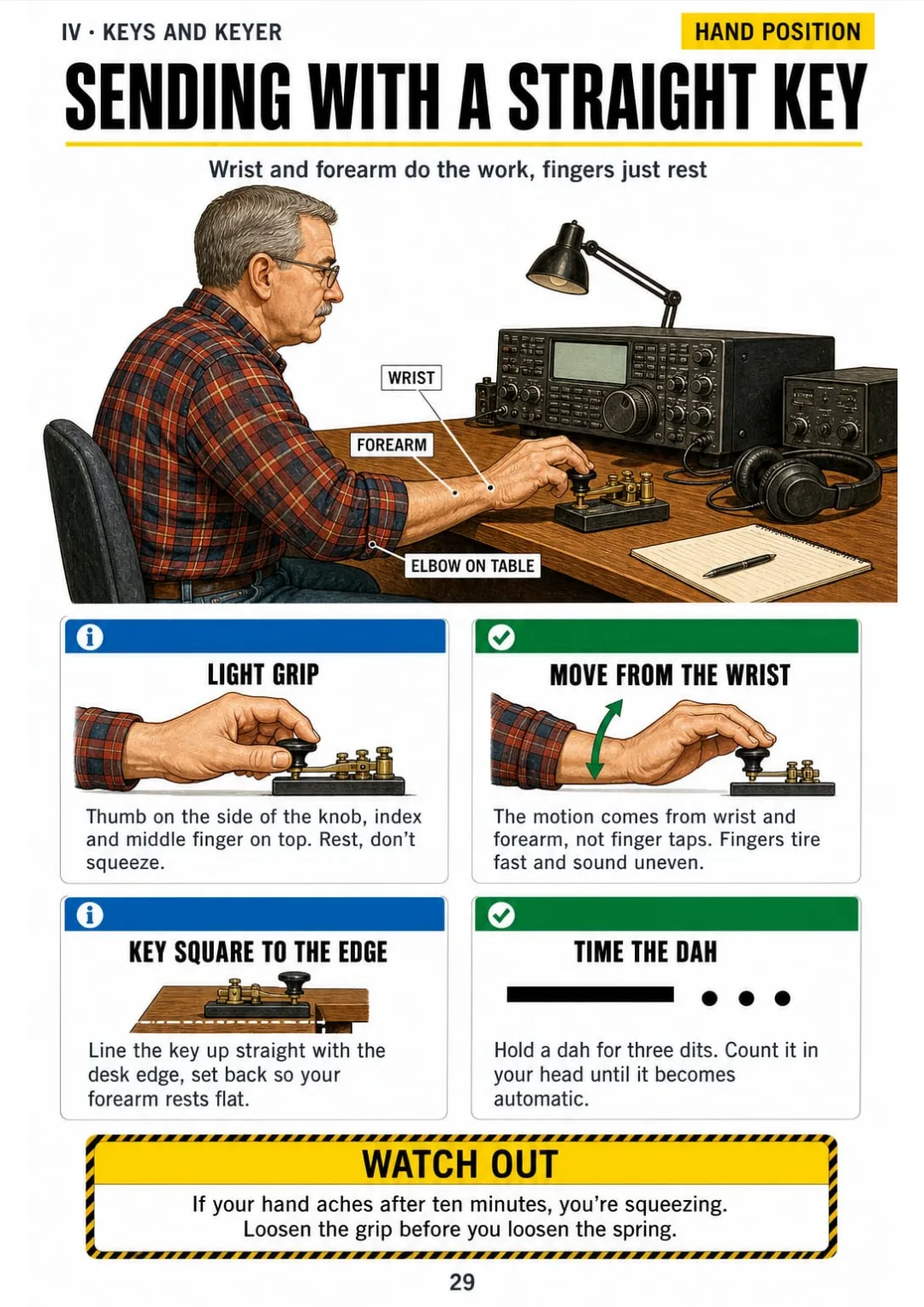
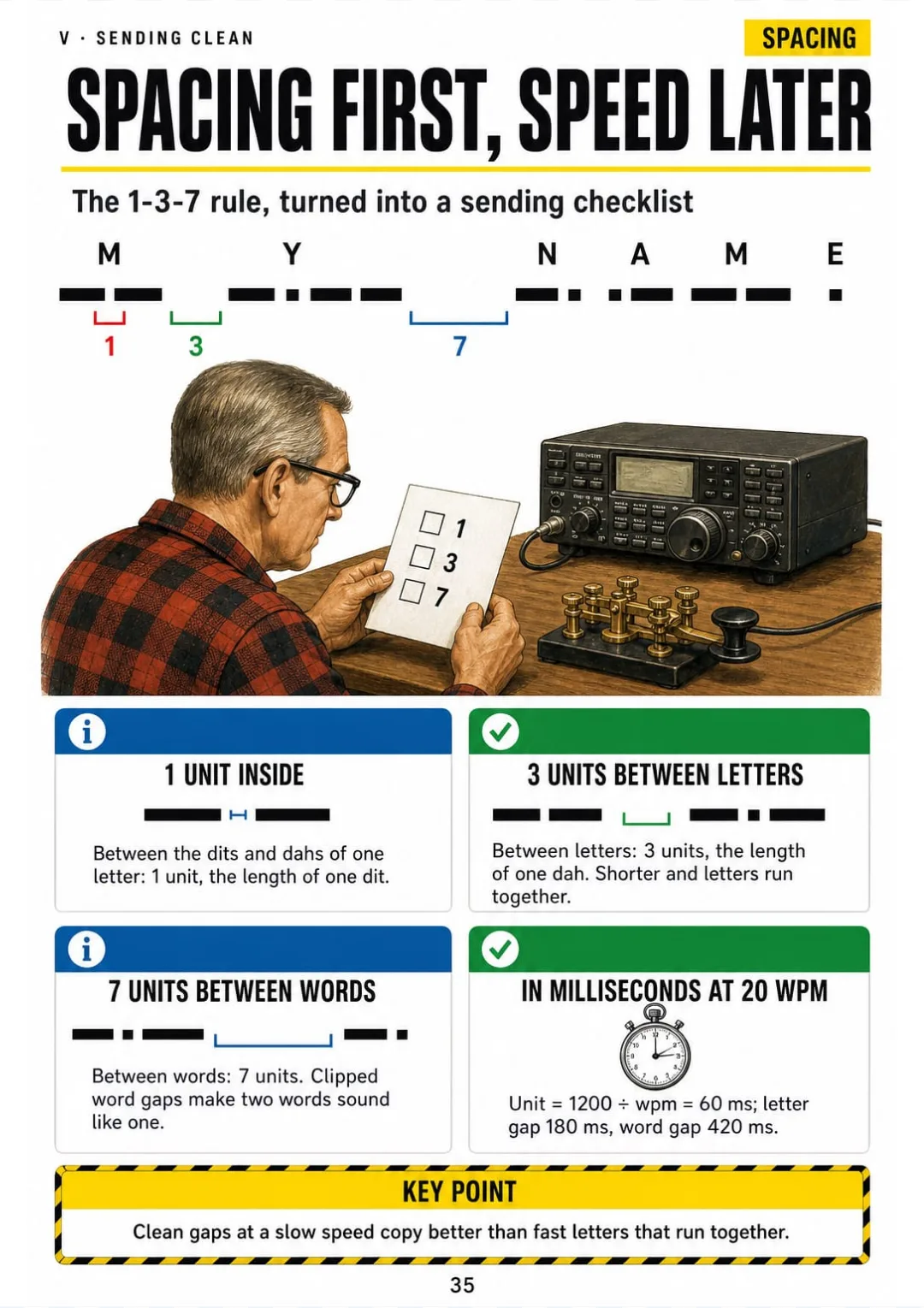
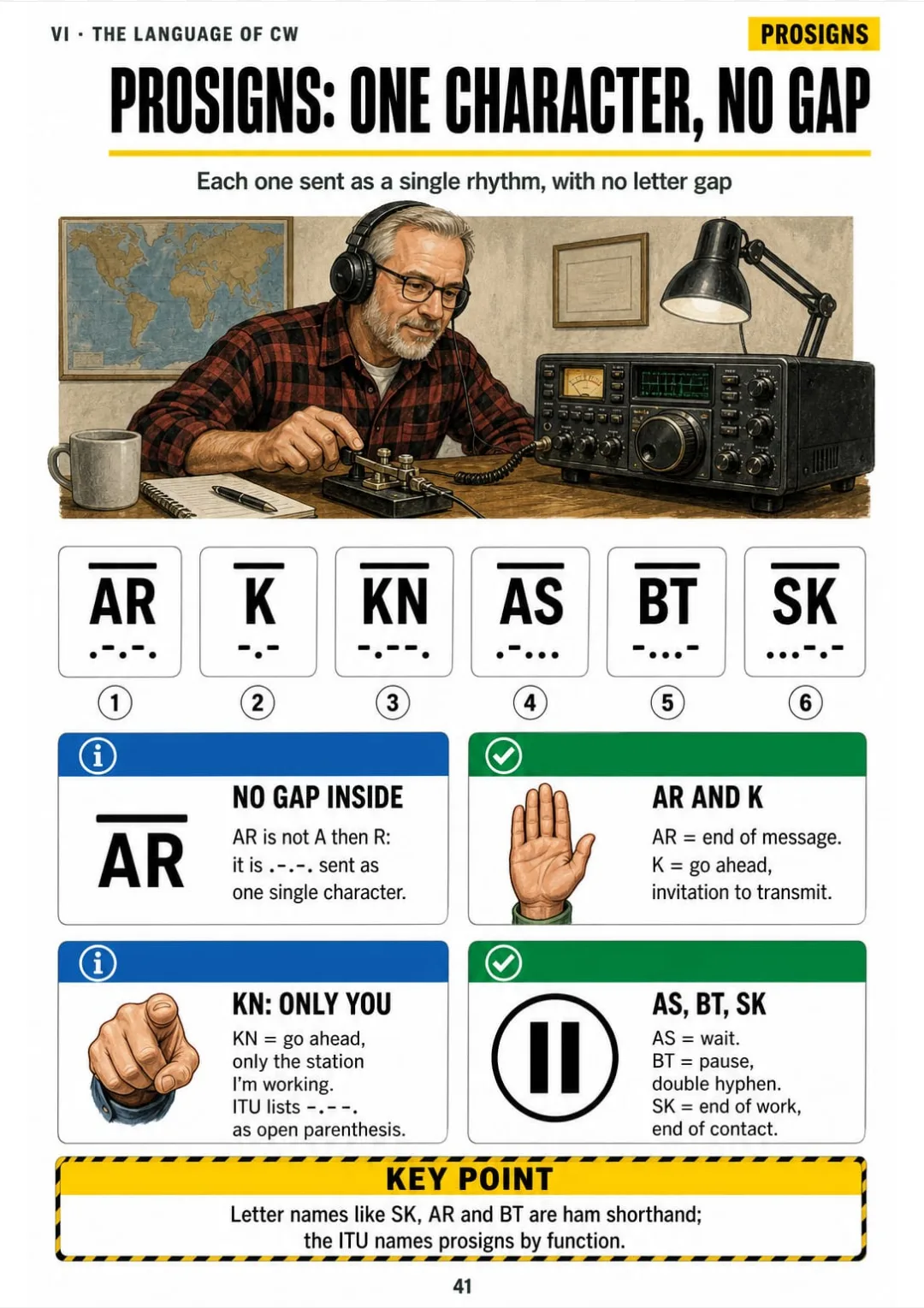
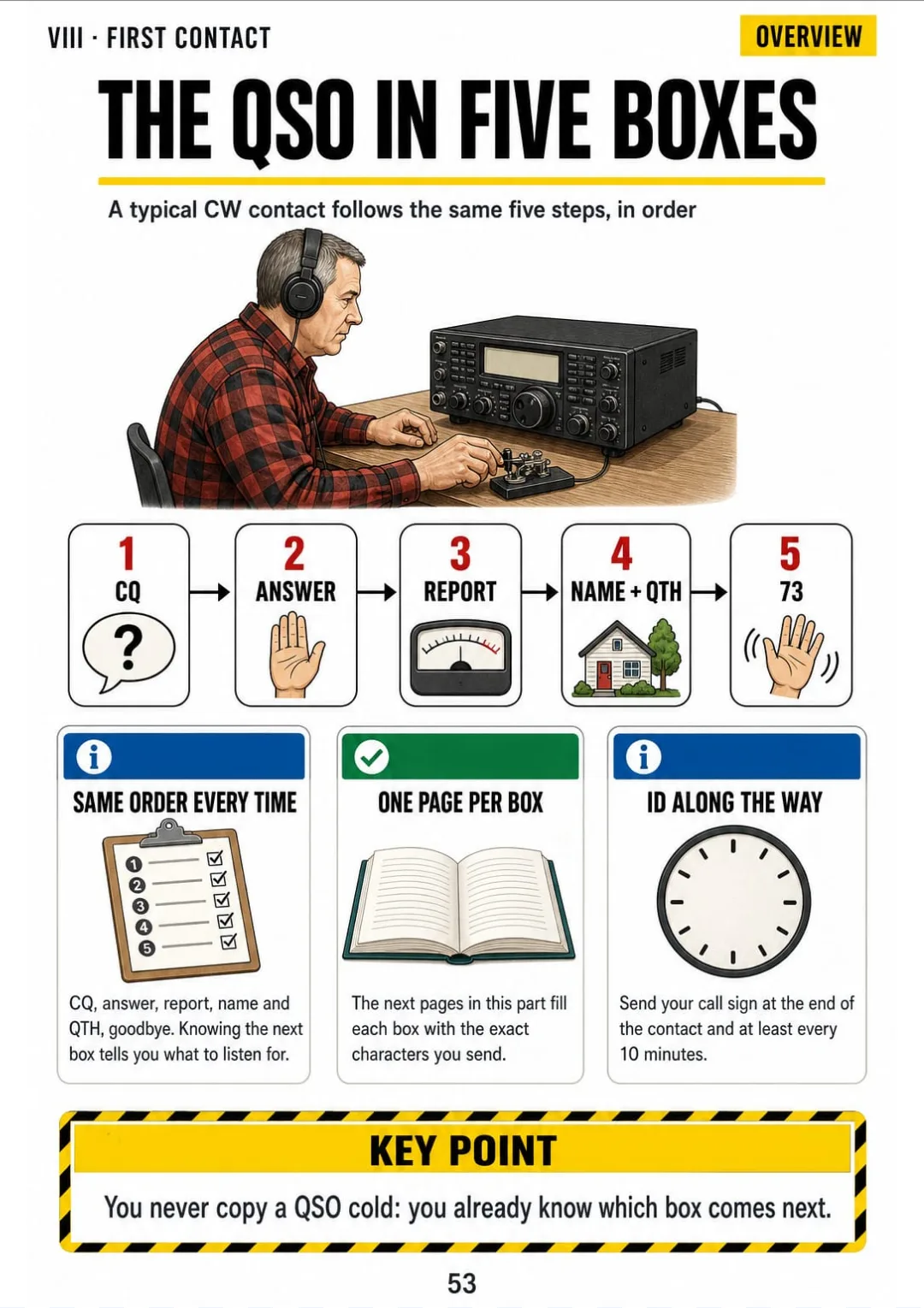
The rest works the same way. Spacing measured in units, the straight key labeled part by part, prosigns sent as one character, the whole QSO drawn as five boxes: each one has its own page.
Next time a letter gets away, you skip it and keep copying, without going back to the chart.

Code by sound, the alphabet as rhythm, head copy, keys and paddles, clean sending, the language of CW, US bands, your first contact and a final review: 65 pages, all illustrated
Think of it this way:
You hear a CQ on 40 meters, slow and steady, and you'd like to answer. But you're not sure what goes after the callsign. That's the moment you need the order of a contact.
You open the QSO page and there it is: five boxes in a row, CQ, answer, report, name and QTH, 73. Each box shows what gets sent.

Same with spacing in units, the copy loop, the labeled straight key, prosigns and the 30-meter band: each one sits on its own page.
Morse Code for Ham Radio Illustrated is 9 parts and 61 topics, all drawn, ending with the letters you mix up, the most common mistakes and a weekly practice plan.
What you see drawn, you don't have to memorize.
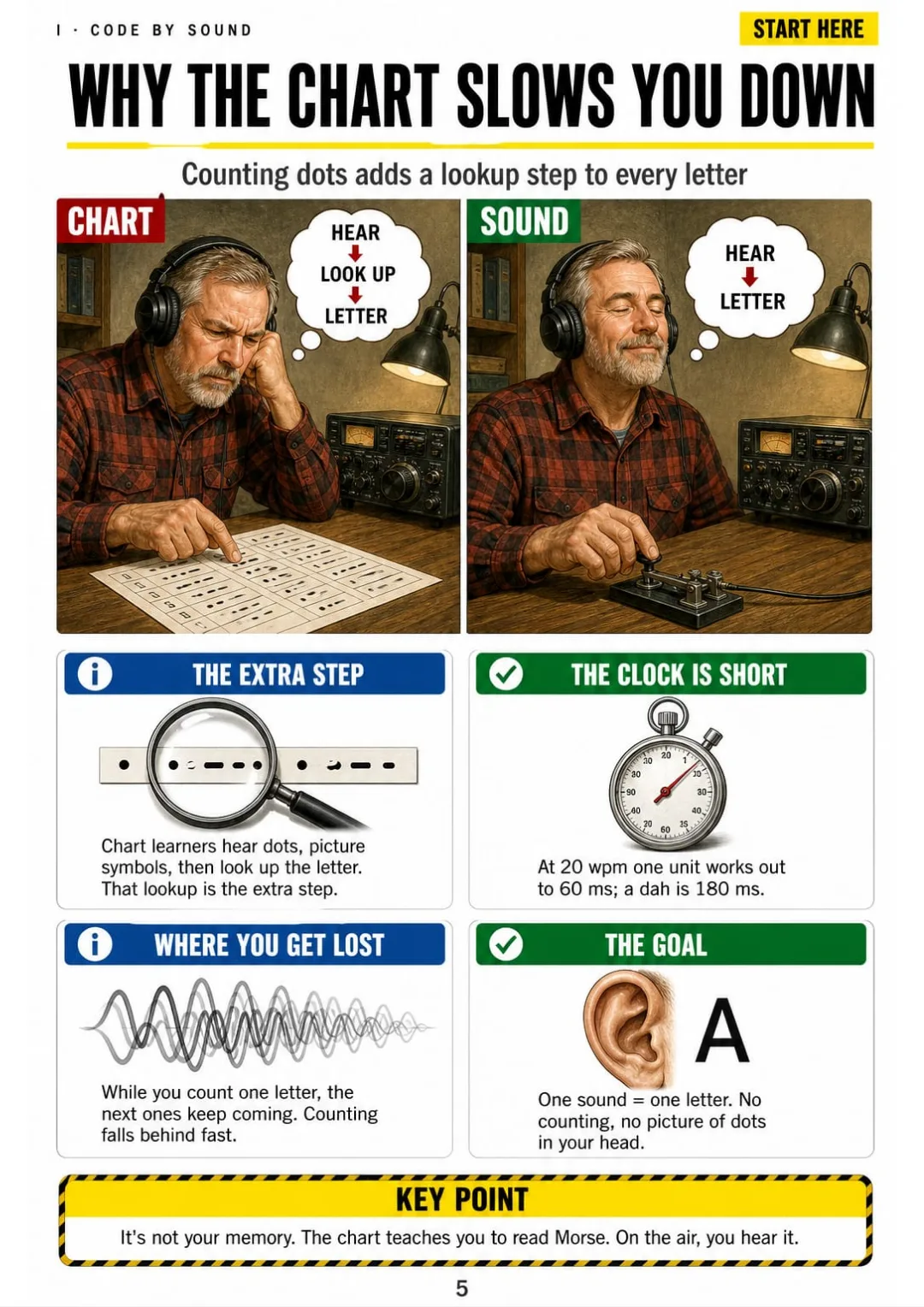
Why the chart slows you down, dit and dah, the unit, spacing, PARIS and words per minute, character vs effective speed, the Koch way.
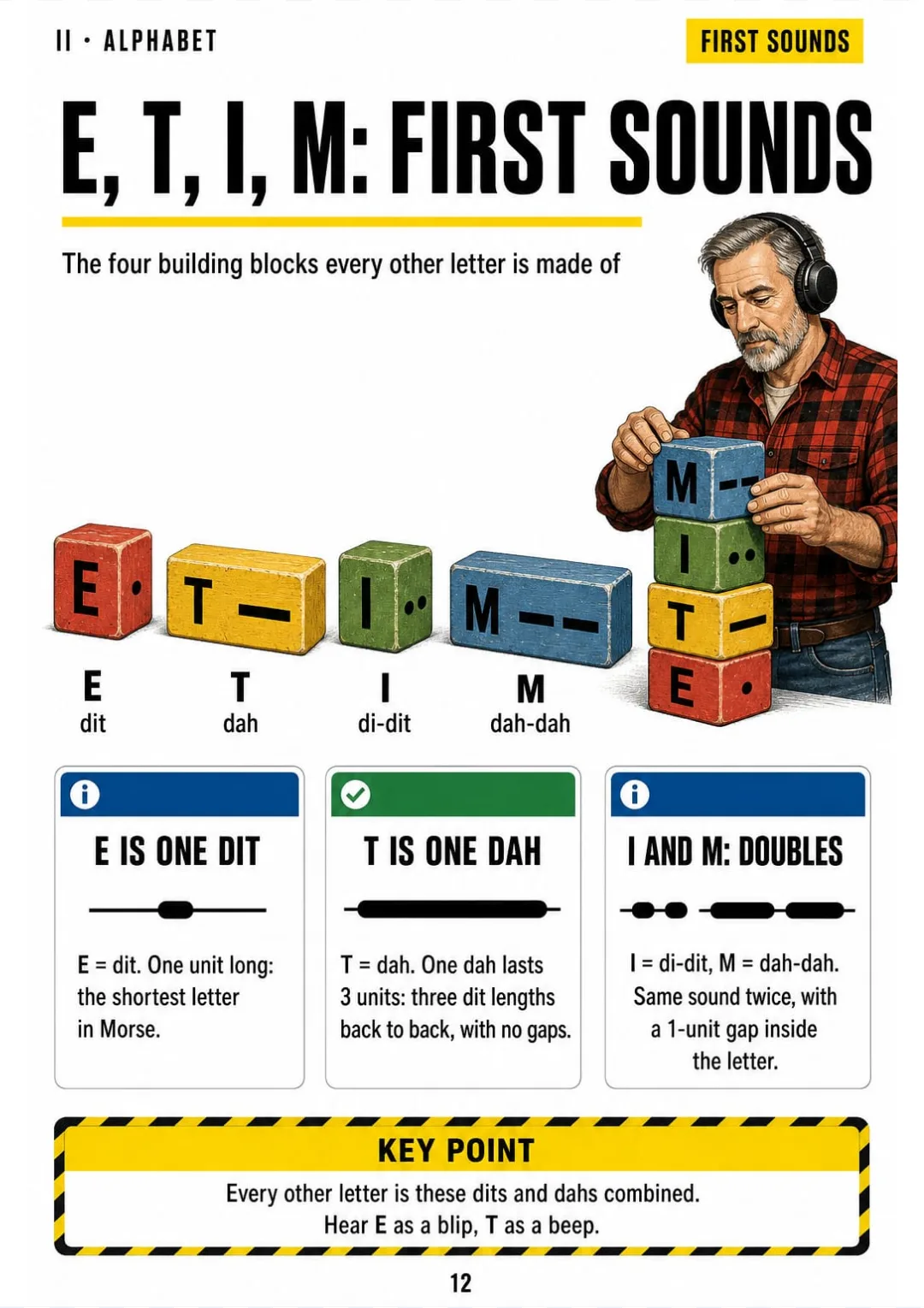
The whole alphabet drawn as rhythm: E, T, I, M, mirror pairs, the dit and dah ladders, numbers, cut numbers and the punctuation you'll hear.
Hear it, know it, let it go, copying behind, words that sound like one tune, your own callsign, and copying through noise and fading.
The straight key labeled, paddles, iambic mode A vs mode B, the electronic keyer, plugging into your rig, break-in and sidetone.
Spacing first, even dits and dahs, checking your own sending, a speed you can copy, fixing mistakes and sending callsigns.
Prosigns, the Q-codes you'll use, common abbreviations, the RST report, QRL? before calling and station ID rules.
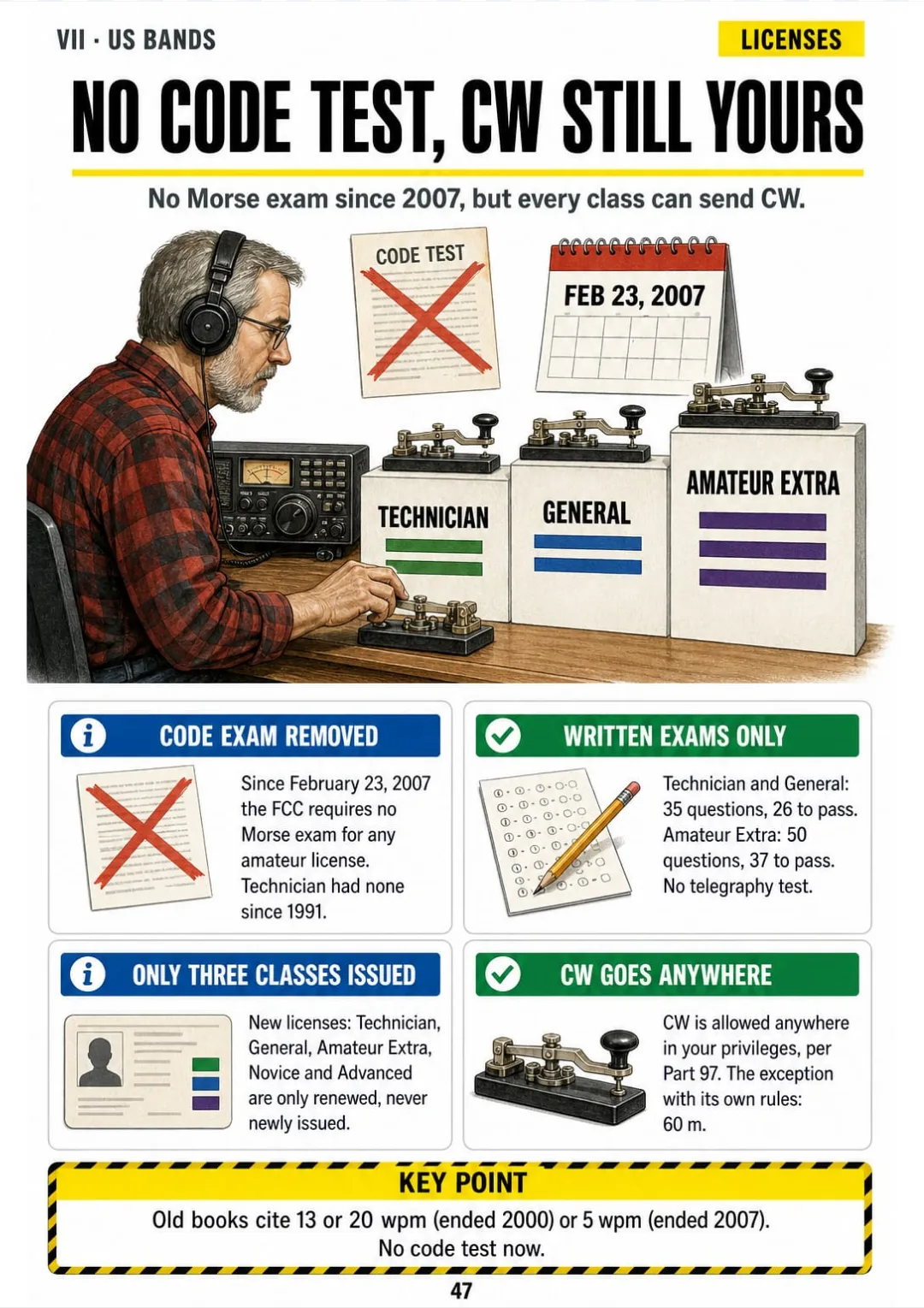
No code test, but CW is still yours: Technician and General CW segments, 30 meters, the Extra-only bottom 25 kHz and slow-speed spots.
The QSO in the same order every time: calling CQ, answering, the first exchange, signing off, fast replies, contests and logging.
Letters you mix up, common sending and copying mistakes, a checklist before you transmit and a weekly practice plan.
At the end of the book: A checklist before you transmit and a weekly practice plan.
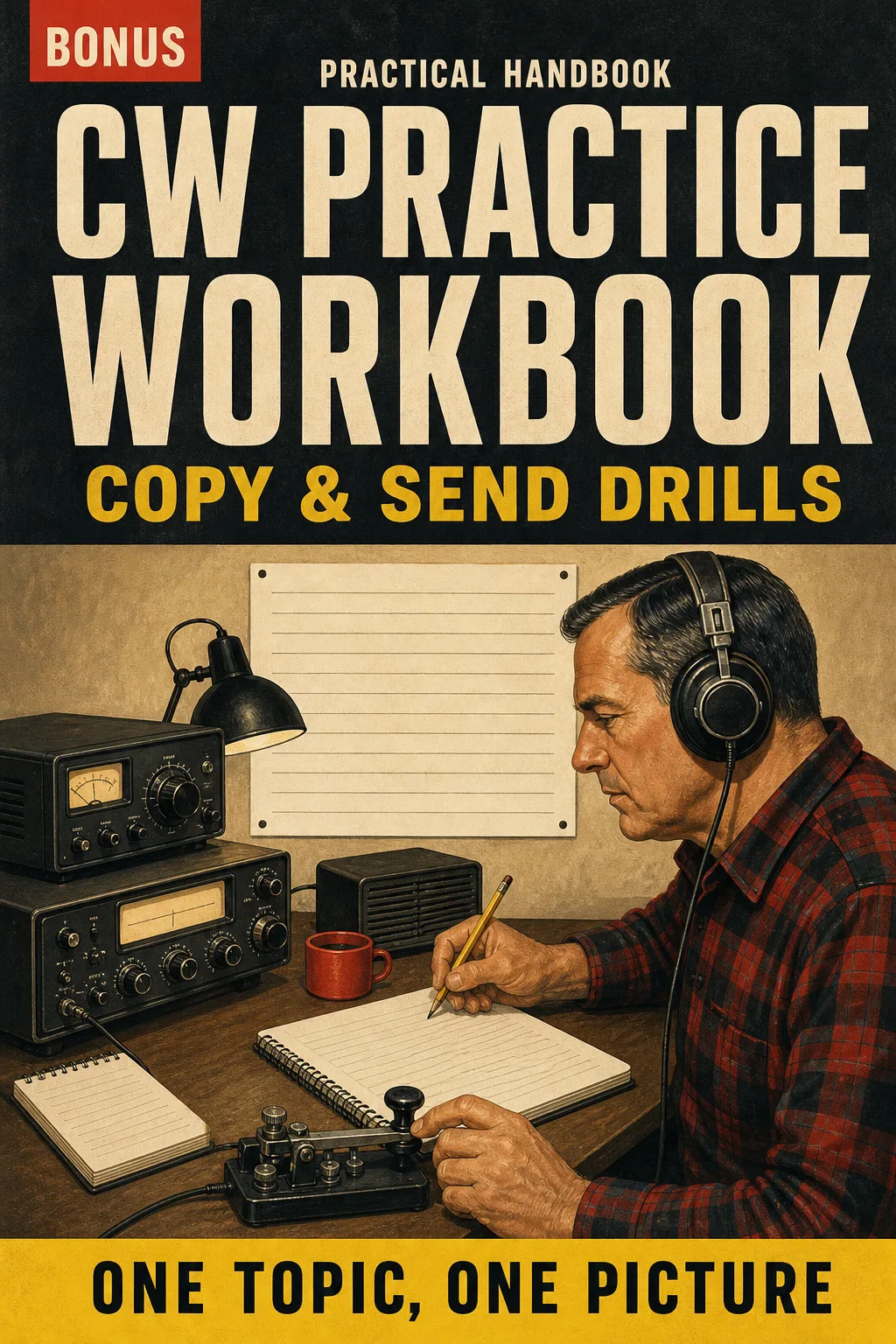
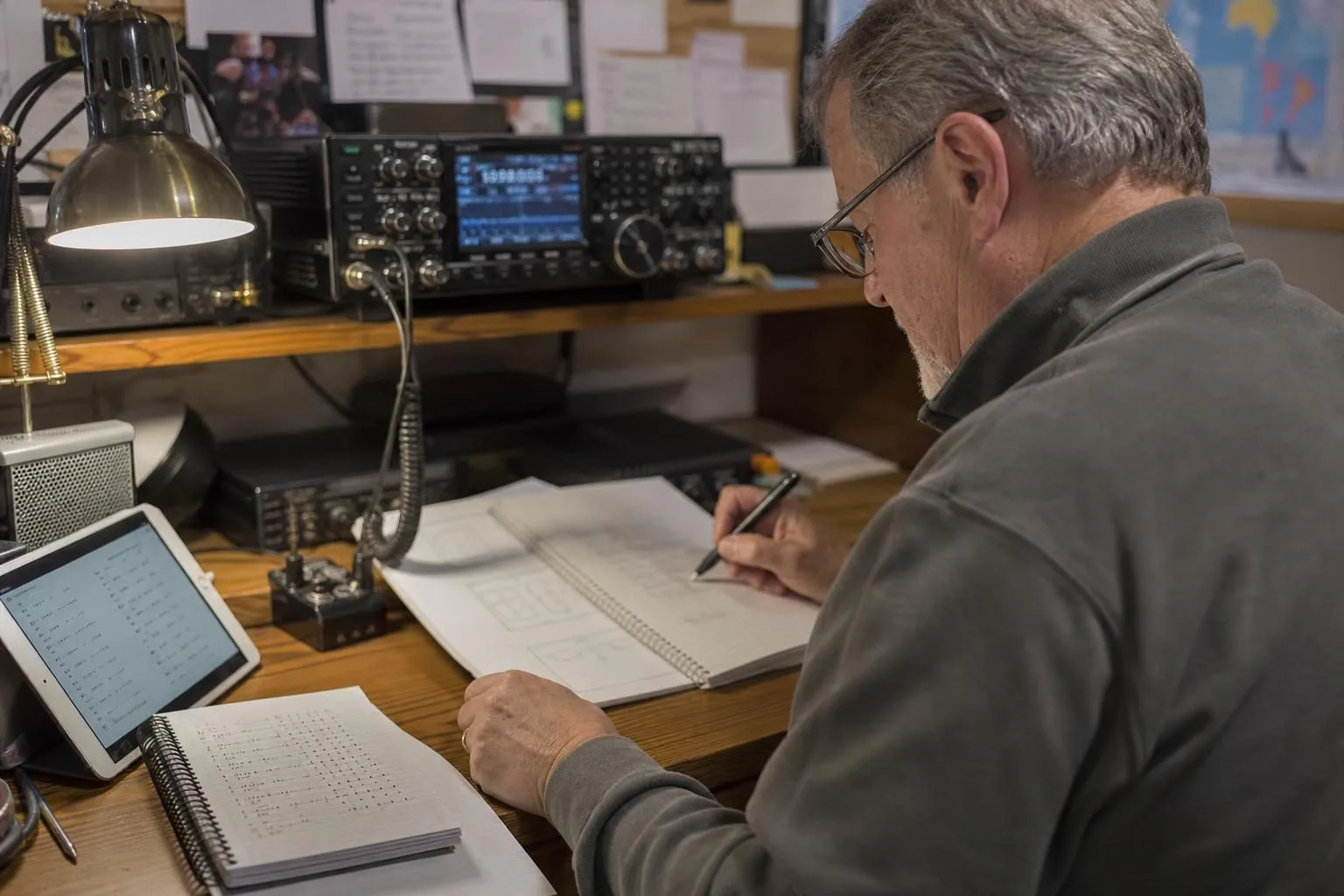
Daily drills by letter group, with blank copy sheets and answer keys, so you practice in the same order the book teaches.

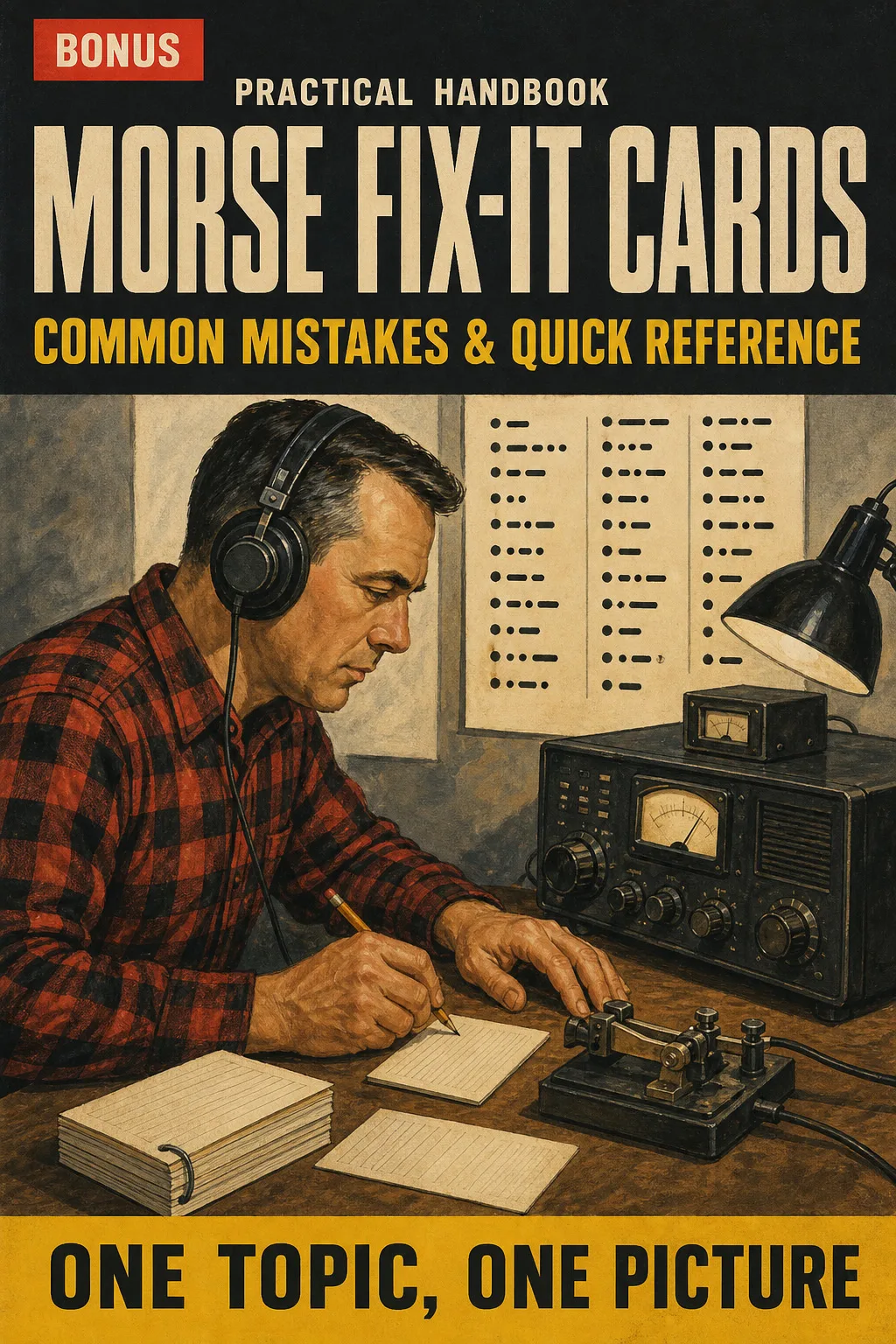
The most common sending and copying mistakes shown before and after, plus prosigns and abbreviations on cards to keep next to your key.
📄 This is a digital PDF book sent to your email: nothing is printed or shipped.
PDF by email: We email you Morse Code for Ham Radio Illustrated as a PDF, together with the two free books. It's a single payment: no installments, no extra charges.
Every letter is drawn as a sound, so you stop counting dits and start hearing letters, in the order the book teaches.
The QSO in five boxes, the prosigns and the RST report are drawn on their own pages, ready to print and keep next to your key.
If you work phone or FT8, or learned Morse years ago and let it slip, you get the rhythm, the spacing and the US CW segments back in one place.
📄 This is a digital PDF book sent to your email: nothing is printed or shipped.
Try Morse Code for Ham Radio Illustrated for 30 days, bonus books included.
We refund everything if the file won't open, if the book isn't what you see here, if you were charged twice or if the email doesn't arrive. Just email us.
You pay once. No subscriptions.
Yes, even if you're starting from scratch: it begins with the sound of E and T and goes all the way to your first contact. You don't need any speed to begin. If you learned Morse years ago, it works as an illustrated refresher, with character vs. effective speed explained so you can rebuild speed without counting dits.
Timing, characters and prosigns follow Recommendation ITU-R M.1677-1. Band segments and station ID follow the FCC rules for the Amateur Radio Service (Part 97): the CW segments for Technician and General, 30 meters and the Extra-only bottom 25 kHz. Always check segments against the current rules before you transmit.
No. It's an independent illustrated study book, not affiliated with or endorsed by any agency or radio organization.
No. It's study material to go with your on-air practice, your club and your mentor, not a replacement for them.
The apps give you the sound. The book gives you the picture: each letter drawn as a rhythm, spacing in units, the key labeled part by part, the QSO in five boxes and a weekly practice plan. It's a PDF with no audio, so you keep it next to your app or your receiver while you practice. The drills and copy sheets are written for this book; there's been no Morse code test for a US license since 2007.

The book and the 2 bonus books come as PDFs by email, sent to the address you enter at checkout.
No. It's a one-time payment, no subscription.
Yes. It's a PDF you can print at home or at a print shop and keep right next to your key.
You have 30 days. We refund everything if the file won't open, if the book isn't what you see on this page, if you were charged twice or if the email doesn't arrive: just email us.
No more rereading the chart and counting dits.
The QSO, the spacing and the prosigns are drawn, right there.
You go on the air knowing where everything is.
Drawings make studying faster.
The book is right below.
One-time payment: US$ 27 · Guarantee: 30 days · PDF by email
YES, I WANT MORSE CODE FOR HAM RADIO ILLUSTRATED FOR US$ 27📄 This is a digital PDF book sent to your email: nothing is printed or shipped.